


 EN
EN
 AR
AR
 FR
FR
 DE
DE
 JA
JA
 KO
KO
 PT
PT
 RU
RU
 ES
ES
 DA
DA
 FI
FI
 NO
NO
 SV
SV
 TL
TL
 BG
BG
 HR
HR
 CS
CS
 NL
NL
 EL
EL
 HI
HI
 PL
PL
 RO
RO
 IW
IW
 SR
SR
 SK
SK
 SL
SL
 UK
UK
 VI
VI
 SQ
SQ
 ET
ET
 HU
HU
 MT
MT
 TH
TH
 MS
MS
 GA
GA
 IS
IS
 AZ
AZ
 KA
KA
 BN
BN
 MN
MN
How To Choose The Best Large Format Printing Service For Fabric Light Box
Offline stores and exhibitions are recovering as the pandemic ends. The advertising market is growing steadily. Today, visual marketing changes fast. Display quality directly affects brand value.
Simple tools like roll-up stands and fabric banners no longer satisfy display needs. They do not grab attention quickly. Instead, businesses now choose fabric light boxes. These are bright, stylish, and sustainable high-end solutions.
Smaller printers (2ft or 4.5–5.3ft) cannot handle large fabric light boxes. They cannot provide a seamless, uncut look. Many people are now using 3.2m wide industrial printers.
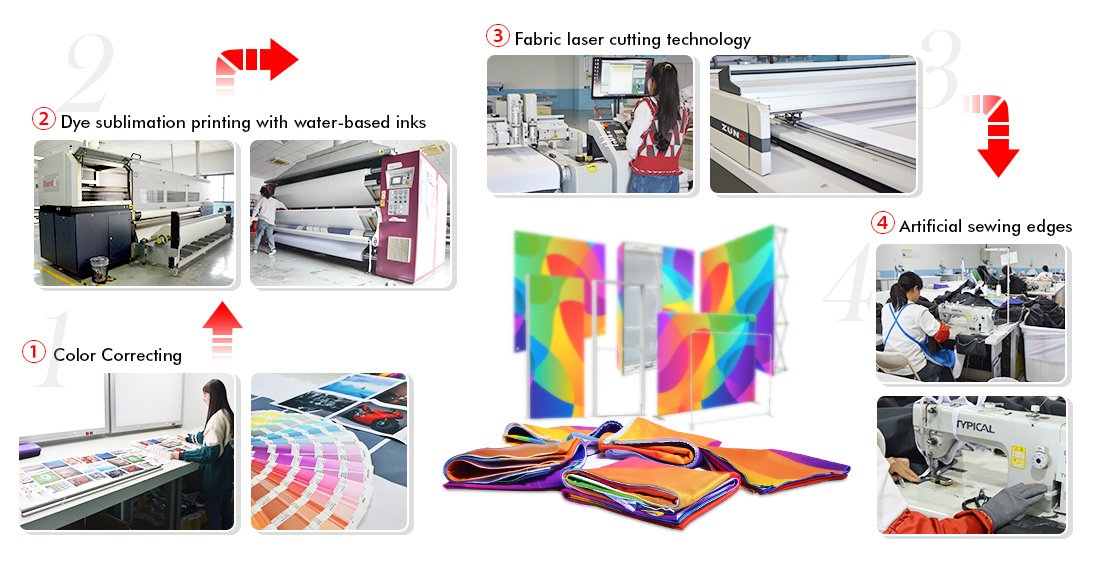
As an industry leader, Lintel uses 10.5ft wide-format tech from Italy and Korea. Combined with Swiss laser cutters, Lintel sets new standards for portable displays. This guide helps you pick the best large-format printing supplier. We analyze four areas: machines, materials, production, and business support.
1. How to choose a printing machine?
A normal printer cannot create high-quality, seamless visuals. You need professional large-format machines. These must handle huge, one-piece prints without seams or cutting while staying very precise.
When picking machines for booths or pop-up shops, the width depends on your visual goals and budget. For most common booth needs, you need a width of at least 4.5ft (1.37m) to 5.3ft (1.6m).
| Material Type | Common Size | Min. Machine Width | Notes |
| Roll-up / X-Banner Stand | Width: 60-80cm (2-2.6ft) | 2ft (24 inches) | Fits single units; cannot print large backdrops. |
| Standard Backdrop | Usually 2.4m high (8ft) | 4.5 - 5.3ft | Most common industry width. Most graphics print horizontally. |
| One-piece Seamless Backdrop | Width: 3m (10ft) or more | 10ft (3.2m) | Best for large exhibitions. Machines are huge and expensive. |
For large trade shows or high-end commercial spaces, smooth visuals create a premium feel. Seams are the biggest enemy of luxury. When you join multiple panels for a large graphic, the seams show up clearly when backlit in a lightbox. Traditional printers are limited to widths of 1.5m or 2.4m. This forces manual joining, which creates ugly black lines. In lightboxes, these seams are impossible to hide.
Lintel uses professional printers from Germany and Korea. These machines print up to 3.2m (10.5ft) wide. For most standard booth backdrops, we offer:
Seamless Production: Within 3.2m, we guarantee no joints or seam marks on your graphics.
Support for Extra-Long Graphics: Even for 11-meter giant lightboxes, we use continuous roll printing. This creates one solid piece without cuts. Segmented printing cannot match this smooth, even look.
International Standards: Most global booths are 10ft wide. Our 10.5ft printers include extra space (bleed) to fit standard frames perfectly. This covers a 10ft wall completely. It ensures your logo and key visuals are never cut by seams.
Printing Solutions: Lintel offers dye-sublimation, direct, and UV printing. We provide a one-stop service for all your needs.
| Comparison Dimension | Dye Sublimation | Direct-to-Fabric | UV Printing |
| How it Works | Prints on paper first, then uses heat and pressure to move it to the material. | Prints ink directly onto the fabric or material surface. | Uses UV ink and cures it instantly with UV light. |
| Best Materials | Polyester fabrics (best for SEG light boxes). | Fabrics, cotton, and wall cloth. | Hard materials like acrylic, PVC, metal, glass, and wood. |
| Color Quality | Bright, high saturation, and smooth gradients. | Realistic colors with great detail. | Vivid colors with a 3D look; can add spot varnish. |
| Visual Texture | Soft feel; no visible ink layer on top. | Ink goes into the fibers; feels natural. | Ink stays on the surface; feels slightly raised. |
| Eco-Friendliness | Water-based ink; eco-friendly and odorless. | Water-based ink; quite eco-friendly. | Contains chemicals; slightly less eco-friendly. |
| Outdoor Use | Usually for indoor displays. | Mostly indoors; needs special ink for outdoors. | UV-resistant and waterproof; great for long-term outdoor use. |
| Production Speed | Needs two steps (print + transfer); medium speed. | One step; fast production. | Dries instantly; high efficiency. |
| Cost Structure | Moderate cost; good for bulk orders. | High machine cost; medium unit cost. | Expensive machines; high unit price. |
| Summary of Pros | Vibrant colors, eco-friendly, best for large lightbox fabrics. | Simple process, high accuracy, fits many fabrics. | Fits many materials, very durable, can do special effects. |
| Summary of Cons | Only for polyester; not for pure cotton. | Average results on dark fabrics. | Thick ink layer; average on soft materials; high cost. |
2. Why choose Dye Sublimation for fabric light boxes?
Why must large-format printing use Dye Sublimation? In fabric light boxes, ink must enter the fibers rather than sitting on the surface. Top-tier services are known for deep blacks and high saturation. Colors do not fade under backlighting; they look even more vivid.
High Resolution: Lintel uses four-color eco-friendly inks with resolution up to 600x800 DPI. Unlike UV or solvent printing, this tech turns ink into gas to bond with polyester at a molecular level. It creates bright colors and natural gradients perfect for close-up viewing.
Professional Color Calibration: Lintel's technical team calibrates every file before printing. This ensures your brand's Pantone colors stay consistent across different batches.
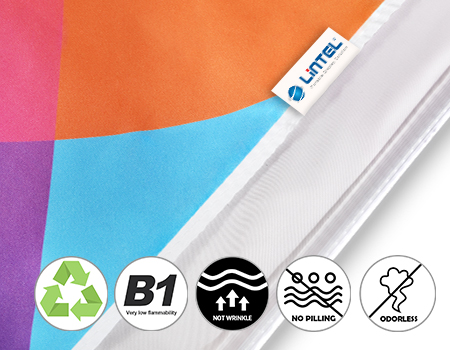
Eco-friendly Ink: Lintel uses 100% recyclable, pollution-free water-based inks.
Fire and Heat Resistant: Graphics are printed on 100% recyclable fireproof polyester (DIN 4102 B1 class). This fabric handles high heat without warping or shrinking.
Great Durability: Lintel prints are guaranteed not to fade for three years outdoors. Indoor displays can last up to six years. This provides a high return on investment for permanent retail fixtures.
3. Why choose laser cutting instead of vibration knives?
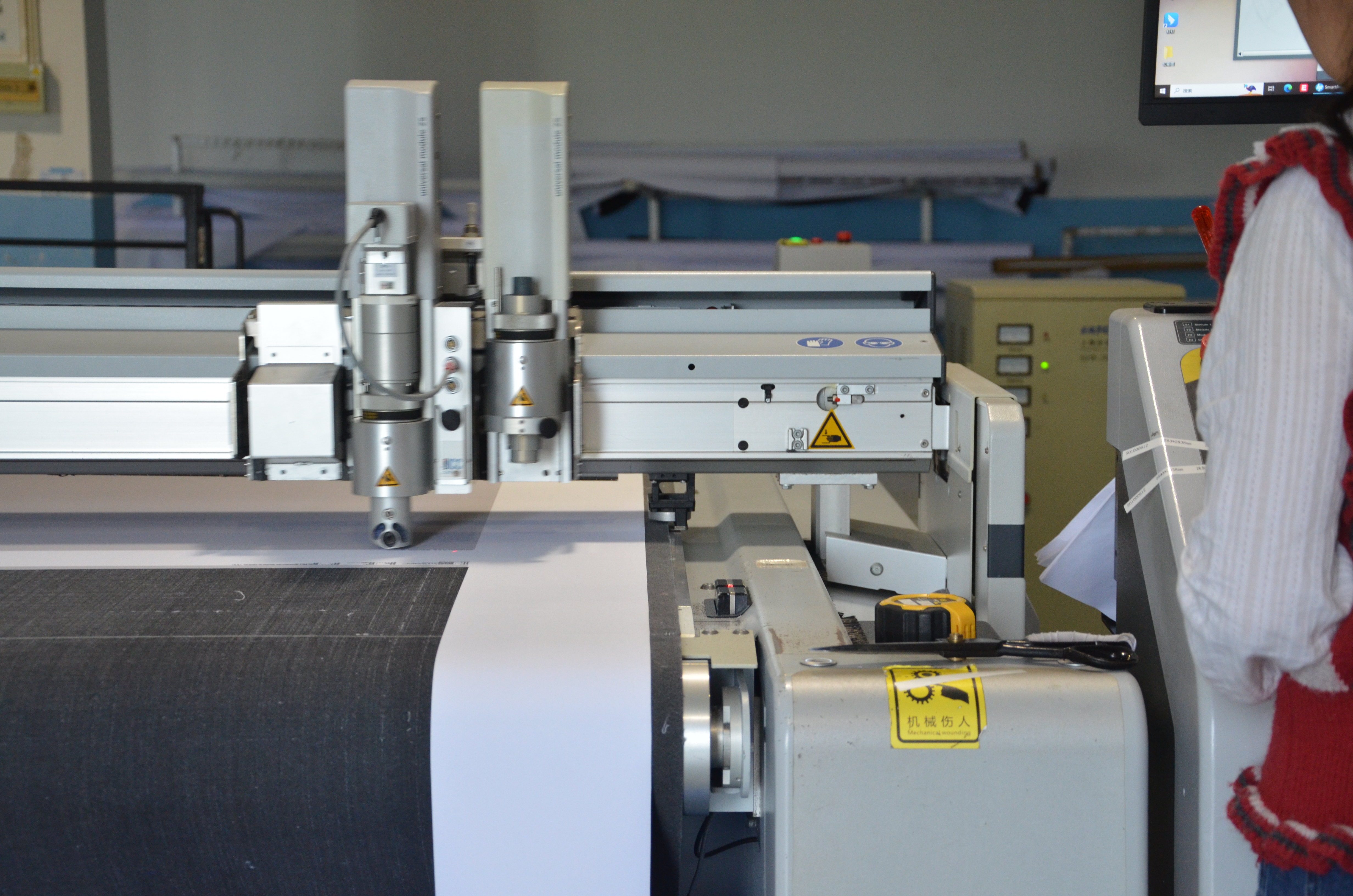
Poor finishing can ruin even the best prints. The beauty of a fabric light box comes from its tension. If the cut is uneven, the image distorts when stretched onto the frame. Even a 5mm error can make the display look crooked. To solve this, Lintel uses Swiss-made laser cutters rather than traditional CNC blades.
Edge Sealing: The high heat from the laser automatically seals the polyester edges. This prevents fraying and avoids the "snagging" or tearing caused by blades.
Zero Physical Contact: The cutting process does not touch or damage the printed image. This ensures precision down to the millimeter.
| Cutting Method | arket Trend | Common Applications | Advantages | Limitations |
| Laser Cutting | Growing fast (especially for SEG fabric) | Polyester light box fabric, soft film | High precision, sealed edges (no fraying), fits bulk orders | High equipment cost |
| Vibration Knife (CNC Blade) | Very common | KT boards, PVC, wall stickers | Fast, works with many materials | Fabric edges may fray slightly |
SEG graphics need very precise sizes. They must not be too loose or too tight when inserted into aluminum profiles. Frayed edges hurt the sewing of silicone strips and shorten the product's life. Therefore, using laser cutting machines prevents damage to the printed surface during processing.
To fit the graphic and frame perfectly, Lintel hand-sews silicone strips (SEG) around the edges. Combined with stretchy fabric, the assembled graphic creates perfect tension and removes all wrinkles. You simply push the silicone strips into the frame grooves. No professional tools are needed.
4. Do you offer one-stop printing and sourcing?
A professional large-format printer must have materials for different events. Lintel offers fabric options for almost all portable displays:
270g Polyester Fabric: The best choice for fabric light boxes. It lets light through evenly. Colors look full under backlighting without showing the shadows of LED beads.
230g Polyester Fabric: Designed for stretch displays like pillowcase backdrop. It is more elastic and wraps tightly around the frame for a smooth, elegant look.
110g Polyester Fabric: Super lightweight with great light penetration. It ensures a double-sided visual effect and works well outdoors.
Black Back Graphic: To stop light from leaking, we offer Black Back fabric. It is used on the back of single-sided light boxes to ensure light only shines through the front.
5. Is the printed fabric graphic portable and easy to maintain?
Modern marketing focuses on being lightweight and green. Lintel designs products for exhibitors on the move:
Fast Shipping: Thanks to our integrated printing and cutting, we can finish production within 8 hours of an order. This is vital for urgent trade shows or pop-up events.
Extreme Portability: Foldable storage and washable.
Wrinkle-free Storage: You can fold the graphics and put them in the included Oxford wheeled bag. This saves a lot of shipping space.
Anti-wrinkle Tech: Our stretchy fabric ensures all fold marks disappear once the SEG graphic is pressed into the frame.
Washable: You can wash the fabric in 30°C warm water. If the graphic gets dirty during setup, it is easy to clean.
100% Recyclable: All polyester materials can be recycled. This fits modern ESG environmental strategies.
6. Do you offer a sustainable business model?
Lintel helps customers become local market leaders. Besides printing, we offer full partnership models to help you grow:
Production and Sales Support: We provide technical support and machine sourcing to help you set up your own local production line.
Raw Material Supply: We supply white unprinted light box fabric and Black Back fabric globally at wholesale prices.
Design Support: If you do not have a professional artist, our design team can help you from the initial concept to the final file.
Agent Opportunities: We help local entrepreneurs understand the market and build production lines to become authorized regional manufacturers.
In an era where sustainability and visual impact are both important, choosing a large-format printing service is a strategic decision. When you choose Lintel, you get more than just a machine. You get a solution with 10.5ft wide technology, Swiss precision cutting, and 6-year durability. This ensures your brand always stays bright and seamless.
If you are looking for a partner for your next Fabric Light Box project, Lintel provides the strongest visual support through eco-friendly materials, mass production, fast delivery, and technical help.
For more info, catalog, price lists, dealer services, pls contact Lintel Email:[email protected]
Frequently Asked Questions:
Q1: Why should I choose 3.2m (10.5ft) wide-format printing for my exhibition booth?
A1: Choosing a 3.2m (10.5ft) wide-format printer is essential for creating seamless, one-piece backdrops. Standard printers (4.5–5.3ft) require multiple panels to be joined together, creating "ugly black lines" or visible seams that are magnified when backlit. Lintel’s 10.5ft technology ensures a premium, uncut look that fits standard 10ft global booth frames perfectly, including the necessary bleed for a professional finish.
Q2: What is the best printing method for SEG fabric light boxes?
A2: Dye Sublimation is the industry standard for high-end fabric light boxes. Unlike UV printing, which sits on the surface, dye sublimation turns ink into gas to bond with polyester fibers at a molecular level. This results in:
Deep Blacks & High Saturation:Colors remain vivid even with intense LED backlighting.
Durability: Prints are washable, fold-resistant, and won't crack or fade for up to 6 years (indoors).
Eco-Friendliness: Uses 100% recyclable water-based inks.
Q3: Laser Cutting vs. Vibration Knives: Which is better for SEG graphics?
A3: Laser cutting is superior for Silicone Edge Graphics (SEG). Lintel uses Swiss-made laser cutters because the high-heat beam automatically seals the polyester edges, preventing fraying. Traditional vibration knives (CNC blades) can cause "snagging," leading to uneven tension or frayed edges that make it difficult to sew the silicone strip and install the graphic into the aluminum profile.
Q4: How do I choose the right fabric for my portable display?
A4: The choice depends on your specific display needs:
270g Polyester: Best for backlit light boxes; provides even light diffusion without LED shadows.
230g Polyester: Ideal for stretch displays and pop-up frames due to its high elasticity.
Black Back Fabric: Used for single-sided light boxes to prevent light leakage from the rear.
110g Polyester: A lightweight option for double-sided visuals and outdoor flags.
Q5: Are fabric light box graphics easy to transport and maintain?
A5: Yes. Modern fabric graphics are designed for extreme portability. Lintel’s tension fabrics are wrinkle-free; any fold marks disappear once the SEG graphic is stretched into the frame. They are also machine-washable at 30°C and can be folded into a compact wheeled bag, significantly reducing shipping costs compared to rigid PVC or KT boards.
Q6: Can Lintel support local production for global distributors?
A6: Absolutely. Beyond being a supplier, Lintel offers a sustainable business model for international partners. This includes:
Raw Material Sourcing: Global wholesale supply of unprinted lightbox white fabric and black-back fabrics.
Technical Support: Assistance in setting up local production lines and machine sourcing.
Design Services: Concept-to-file support for clients without designer.
For more info, catalog, price lists, dealer services, pls contact Lintel Email:[email protected]